Author name: apa

Breaking the Mold

Empowerment – Not Just a Pipe Dream!

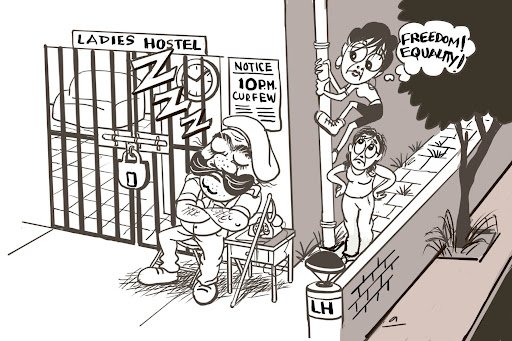
H10: Lessons Beyond the Classroom IITB was a very special place. H10 at IITB was an even more special place. In my first semester, my brother was in town on a visit. We went out to dinner with a friend. It got pretty late by the time we finished close to midnight. By then, worries had been expressed numerous times: What is the closing time in your hostel? They were far more anxious than I was, which was precisely zero on a scale of 0 to 10. That amazed them. When I said, “There’s no such thing,” they were incredulous. How could a girls’ hostel exist without restrictions? They were mightily impressed. All the way from Bandra to Powai, as they dropped me back, they kept asking the same question. This was 1980, and the notion that hostels for women could exist without such rules was simply difficult to believe. Even today, many working women’s hostels have curfew times. Little did they know how my seniors among whom was one famous “hunterwali” , had fought against unfair restrictions. I had heard the stories. I knew about the name change (LH to H10), the lifting of gender-biased rules, and how these remarkable women had defied restrictions by climbing down water pipes and leaving the hostel after the gates were locked. Inspired by these stories, I remember climbing down from the first-floor corridor myself, using the pipe for support, just for the fun of it. But it was not simply about curfew. In many places, men were not allowed inside women’s hostels—not even fathers, brothers, cousins, or classmates. In H10, boys could visit, provided they were met and escorted by a hostel resident. It seemed perfectly reasonable. Why should classmates not be able to study, chat, or spend time together simply because they were of the opposite sex? The atmosphere in H10 was one of genuine gender equality. Although I came from a background where this was taken for granted, I learned that it was not the norm everywhere. More importantly, I learned that unfair rules could be questioned, challenged, and changed. In some way, this undoubtedly contributed to a sense of empowerment. A few years later, while staying in a hostel at an institute in Bangalore, I experienced this lesson firsthand. Friends both women and men would visit in the evenings, and we would sit on the lawn or in my room discussing weekend hiking and climbing plans. Unknown to us, the administration had imposed restrictions on visitors. I found out when a friend’s mother came to invite me to her daughter’s wedding. She arrived with the invitation card in hand, only to be stopped at the gate because “visitors were not allowed after office hours.” I was furious. I confronted the administrative officer. He insisted the rules were for my protection. I pointed out that I was well over eighteen and that he had no right to dictate my personal life or whom I could meet in my free time. Eventually, he said he could do nothing and suggested I meet the Director. So I did. I asked simple questions: Do you want social visits to take place during office hours? I am over eighteen. How can you restrict my life outside working hours? When he could not answer, he fell back on the familiar excuse: “It’s a security issue.” That opened the door for another question. How exactly was a fifty-year-old woman carrying a wedding invitation a security threat? Finally, he agreed to my proposal: visitors could enter if the hostel resident met them at the gate and took responsibility for them. I refused to leave until he picked up the phone and instructed the administrative officer accordingly. It was as simple as that. Ask the right questions, and if there are no answers, absurd rules can be changed. The lessons learned subconsciously in H10 came in handy every time I encountered something unfair. Had H10 accepted those restrictions meekly, I might have assumed that “that’s just the way things are.” But H10 taught me that things did not have to be that way. For that, I will always be grateful.  
Matters of Mischief

The Great Indian Rope Trick

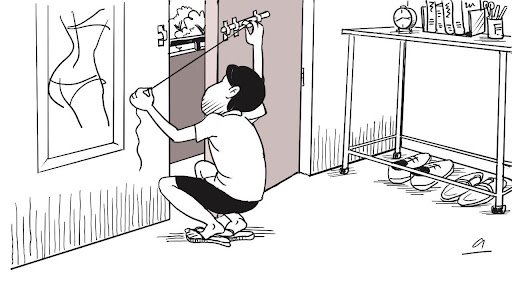
  For most of us, the four years that we spent at IIT Bombay as undergraduates, though a small fraction of our total age, are arguably among the best years of our lives. For most of us, it is the time of many firsts – first time living away from home, first time living among peers of our own age who are not our siblings or cousins, first time living alongside people from all over India and overseas, and other firsts. The strongest memories from IIT come from our time in our hostels. Though each hostel had over 200 students, it was the wings (rooms on one floor on one side of a central staircase) which were the binding unit – like a home away from home. H5 had 18 wings – and each wing had its own culture and peculiarities. Intra-hostel events brought inter-wing rivalries to the fore, but all of these were forgotten during inter-hostel events. Wings also invariably brought together students from different years, thus acting as the passing of the baton of stories and folklore. During my first year in 1985, the oldest student in our wing had started in IIT back in 1979 and by the time I left in 1989, the last set of students I lived with would have left IIT in 1992. As wingmates, we indulged in a lot of the usual activities – eating meals together, cack sessions late into the night, hanging out in each other’s rooms, playing cricket in the corridor, etc. But there was one thing – one prank – that we came to be known for The Great Indian Rope Trick. Like any hostelite in the 1980s, we usually did not lock our door when we went for a shower or for a meal (or even for classes!). Imagine our great surprise when we returned to our room, but found that we could not get in. It was not locked from outside. The window next to the door was shut. And there was no one in the room. But the room was latched from inside! How did that happen? Rooms in H5 were paired with a dividing wall going up about 2/3 of the way to the ceiling. However, no one had climbed over the dividing wall to latch the room from inside. The window in the back of the room had bars. So no one could have climbed through the window (our rooms were on the 1st floor) to latch the room from inside. So how was the room latched from inside? The answer was the Great Indian Rope Trick. The door was opened from outside. A long rope or string was put around the handle of the latch. The door was closed from the outside with both ends of the string available. The string was pulled to slide the latch shut, and then the string was pulled out. Voila! The door had been latched from the inside. For some time after this prank was started, everyone started locking their room from the outside, even if they were just going down to the toilet!  

Breaking the Mold

Origin of the Ladies Hostel on the IITB Campus

  The first girl to join the B.Tech. program of IIT Bombay was Tejaswini Saraf (now Kanvinde). She joined in 1962 after completing 11 years of High School plus 2 years of science college (Int. Sc.). Hence she was admitted directly to the second year of the B.Tech. program as was the IIT practice then. Since there was no ladies hostel on the campus at that time, she stayed temporarily as a guest with the then professor of Civil Eng. Mrs. Shakuntala Bhagat. At that same time there were two other girls on the campus who were pursuing their MTech. degrees. Since they were also working as lab assistants in their department at the same time, they could get an apartment as an employee. Their names are Pushpa Watve (now Apte) and Prabha Ketkar (now Deo). So the institute decided to accommodate Tejaswini with these two girls that first year. Hence there was no need for a ladies hostel in 1962. In 1963, five more girls joined the B.Tech. program. Nandini Gurjar (now Jog) joined after her BSc. Degree (11 years of highschool + 4 years of science degree course). Hence she was directly admitted to the third year of the B.Tech. program as per the IIT practice then and became Tejaswini’s classmate over time. Sheela Koppikar (now Warty) joined after completing Int. Sc. just like Tejaswini and hence was admitted to the second year of the B.Tech. program. The remaining 3 girls who joined in 1963 are Kusum Apte (now Chandragupta), myself Neela Gavankar (now Mudgal) and Rekha Rege (now Nadkarni). We three joined after FY. Sc. (1 year of science college after 11 years of High School) and hence were admitted to the first year of the B.Tech. program. So now there was a need for a ladies’ hostel. Constructing a new building was impossible in the time frame and not financially viable for such a small number of girls. Hence they decided to give us an apartment on the ground floor in a Type III building located centrally in the Asst. Professors’ quarters. Each apartment had two bedrooms, a bathroom, a living room, a separate dining area, and a kitchen. Each apartment could accommodate five students. The living room and the bigger bedroom could be equipped as double rooms and the smaller bedroom as a single room. However, that first year we six girls lived in one apartment and each room was made a double room. Each girl had a bed with a mattress, a writing table and a small steel cupboard as a wardrobe plus book shelf. There was a good size dining table in the dining room where we could eat together and chit chat, share our daily experiences, etc. Our warden was Ms. Leela Rao who was a professor in the department of Physics. We had a resident lady cook named Janabai assigned to us full time and a part time maid named Sheubai who used to commute daily from her home for all cleanup as required and laundry. So, we really lived there like a family and could dedicate our time to our studies as required without any problem. Plus, we were lucky enough to have a family on the campus who went out of their way to provide us some social time during that first year. Professor Parulekar of Mechanical Engineering and his wife Kamal Tai, as we called her, used to invite us for an afternoon tea/snacks and chitchat as often as they possibly could during our first year. We really relished that and have fond memories of the same. Many thanks to the Parulekar family. From 1964 onwards more girls started joining not only the B.Tech. program but also the M.Tech., M.Sc. and Ph.D. programs. The Institute then started giving us more flats as required. Things started becoming more complex. One cook and one maid were not enough, but still somehow managing. On the other hand from 1966 onwards girls started graduating and leaving the hostel. Tejaswini and Nandini were the first two girls to graduate with a B.Tech. degree from IITB. (Even though Pushpa and Prabha did not live with us in our hostel, they too graduated in 1966 and became the first two girls to receive an M.Tech. degree from IITB. And another girl Radha Natarajan, even though was not among the first 6 original residents of our hostel, also graduated in 1966 and became the first MSc. girl to graduate from IITB. She had joined the ladies hostel in 1964 one year after us the first 6. Devaki (last name not known) who joined the ladies hostel sometime in 1965 or early 1966 to complete her Ph.D. thesis was the first girl to graduate with a Ph.D. degree from IITB.) So the hostel was continuing. Our cook Janabai was getting old and left. She was replaced by a male cook. In 1967 Sheela and some other girls graduated and left. I believe in 1967 our hostel consisted of 3 or 4 apartments with a capacity of about 20 students. The Institute realized that the things were getting out of control and now was the time to construct a new building. The construction started in 1967 right behind our building. In 1968 the last three girls of the first six occupants of the original ladies hostel namely Kusum, Neela (myself), and Rekha graduated with a B.Tech. degree and left. The remaining girls from the original hostel were then transferred to the newly built Ladies’ Hostel. Last but not the least, I want to mention here that all the six of us who were the first residents of the ladies hostel on this campus made full use of the knowledge gained at IITB after graduating from here. Most pursued graduate studies in their respective field of engineering either in India or abroad after B.Tech. Some first worked in reputable firms in India and then went abroad for graduate studies, some went immediately after B.Tech. After completing graduate degrees

Roomies, Roads & Rites

A Casual Reminiscence of an NSS Trip

  Somewhere in the second semester, we were told that we need to have a field trip to gather the mandatory 100 hours needed for social service in the first two years by Prof Major. And since we had chosen NSS (because we didn’t get selected in either NSO or NCC or maybe we had thought NSS would be easier) …this was the googly Major kept for us. So it was decided at the end of 1st year, and before the 2nd year began, we would have to go to some place in Kalyan and spend some days or a week doing social service, which would be considered our field work. And so it began … on a hot Saturday morning … and we realised then that Prof Major was actually a Major when he made everyone line up at every station in Bombay where we had to change trains and count the heads. I remember Lottery (Sachin Pachlag) was responsible for tapping the heads of the participants and reporting to Major every time this happened. I think he felt that the job was nothing bigger than counting chillars when you already know how much money you have. But he moved on and so did we. We kept wondering what else was in store for us on the trip. Eventually, after 3-4 hours of train journey, we reached a remote village in Kalyan. And we visited a farm where after taking the tour we understood that we have to bring drastic changes … I felt the person who was explaining was waiting for ages for our batch of vanar sena to come and build the Adam’s bridge for Lanka, basically bring a revolution to uplift the state of that farm, and that means taking up the very tools our farmers or the construction workers use and get to use them effectively to earn our daily meals. That day when we walked around 15 kms on our way back to the camp, many of us thought when we can use the grey matter we will rather not use our muscle matter or lack of it. And so some of us started having medical issues – or should I say developed overnight, things like unknown rashes in their hands and legs, some even done by self-inflicting wounds. That night was also, I believe, when Prof Major witnessed some core language of the IITians … used inside the hostels only. He was quite taken aback, (what else he expected to hear, sadguru vachan like Ramananda Sagar at every end of Ramayan episode?). The mind and weather both were hot and so the camp obviously was indeed going to witness a revolution. And on the 3rd day by evening it was clear the revolution was not in the farm but in our camp itself. Major General had to bow down to the army of Vanar Sena who refused to build the bridge and conquer Lanka in the expected masquerading episode. So it was decided people who think they cannot sustain the physical demands of the camp can leave by giving the right reason. Of course, we can always have the right reason for everything. (Who says IITians don’t run away from big challenges, here I was witnessing it). And I was just wondering how many possible reasons people made to get out of the camp that evening: stomach pain, leg pain, ear pain, pinky finger pain, difficulty in breathing, history of asthma, (someone’s grandma had it so he feared he would too in these conditions), food allergy, white rashes, blue rashes, brown rashes, joint pain, throat pain, nose pain, etc (I did wonder even a professional Doc would wonder what these are). I was one of the few who stayed on, not because we wanted to take up the challenge – after all I was an IITian too – but because we thought we didn’t want to spend another 100 hours during academic sessions in second year of NSS in second year, we did fear the XX grade. Interestingly, the remaining few days were completely different. Prof Major has actually become the professor we wanted him to be, and he had announced “you guys enjoy and have fun, no more rules, no more demands, no more field work, no more bridges” So the few of us who were there, partied well. We had to cook though, which was a better deal than taking up field work, and of course we got to eat aplenty. We did make peace with Ravana eventually I would say. So no need for the bridge, I remember (Samrat Ghosh) from EE was an expert in making chapatis even during those early years. Some others were pro in the food business too. And we cracked a lot though we missed the OH component – but that’s okay we completed the necessary NSS hours.

Hustlers and Visionaries

Start-up of Start-ups

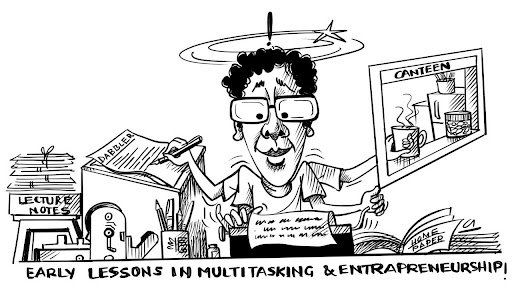
When did the ‘start-up’ culture start in IITB? I don’t exactly know, but let me tell you about some start-ups that occurred in the late nineteen sixties. I ducked in my second year at IIT, so 1966-67 was a year that had to be gone over again. It started badly – before I could even come to the campus, my father informed me that his business investments had resulted in his becoming broke. There was a meagre pension he was getting, and the fees and mess bills would be beyond him. And since I had failed, I had to think about dropping out of IIT or see what could be done. I came back to my room at IIT and analyzed. Was I going to pack up and leave, or was I going to find a way to get my financial requirements? The problem was only about paying for tuition fees, which at that time was fairly meagre, and mess bills, which were like hundred rupees per month. How do I earn about two hundred rupees a month to cover all the costs? And immediately, I hit upon the first job. Those were the days when fifth year undergrads had to submit ‘home papers’ – a kind of thesis or project report, going into 40 or more pages, which all had to be typed, as at that time there were no computers and the like. If I could type eight or ten home papers, it would see me through for a while. I got an old Remington type-writer from home to start on my new venture. In those days, clerical staff at the main building would type out the home papers, and charge seventy-five paise per page. And most students were dissatisfied, because all the formulae they had to insert in the home papers had superscripts and subscripts which the clerical staff would garble into a mess, and lead to retyping of pages, which of course had to be paid for. I offered to type out home papers at fifty paise per page. The first couple of guys, one from civil and another from chemical, helped me a lot – when they saw that their superscripts and subscripts came right the first time, they did enough ‘dindora peeting’ on my behalf in their class for me to have enough business for the season. In fact, I ended up typing a lot of home papers for three years. One benefit of the home paper business is that I had to read through and type out home papers of almost all departments, which gave an excellent exposure to all branches of engineering, much better than all that I learnt in class subsequently! The home paper season ended by November, and I was again staring down the barrel. A Science Congress was being held at IIT in December, where delegates would come from all over the country and get accommodated in the hostels. I volunteered to help, and was there to receive the guests coming to Hostel V. One by one they came, and went up to their allotted rooms, and one by one they came back, with requests about where to buy combs, toothpaste, and the like. By that evening, the first ‘canteen’ was set up in Hostel V, where snacks like ham sandwiches could be had, as well as all the odds and ends such as combs and toothbrushes. My recovery through the canteen business over the December vacation was good enough to take my finances forward, but there were a lot of left-over stocks. I donated these to one of the mess servants, and I asked him to run the canteen on his own from then on, and a lot of students patronized the canteen. Helping someone else set up in a business is an unalloyed joy. It certainly gives more pleasure than all the money you can make for yourself! I used to be a fairly good student, attending class regularly, and taking copious notes on foolscap pages that I neatly filed away. The next business that I got into used my laborious notes, which I now cut into stencils, and printed copies of it, and sold to my classmates. It started with Logic and Ethics, and then went on to Strength of Materials, IC Engines, and a whole gamut of subjects. This became my source of livelihood for quite some time. My good friend and room-mate Chandru Chainani ducked in the third year, and asked me for the stencils of the lecture notes, as ducking gave him a new batch to sell the notes to! Chandru was an exceptionally good student, and very sharp, but unfortunately he took close to ten years to graduate. I always wonder whether he took that long because of any problems, or because he was too busy selling the notes that he took from me! My good friend Mohan Dalal was the Hostel Secretary at that time. He came up to me and asked me if I could produce a Hostel Magazine. I was game for it, but Mohan had restrictions on it – the magazine had to have two columns per page, and each column had to be fully justified (i.e., sharp edge on both left and right). I agreed to that. And that is how The Dabbler came into being. I had to cut stencils for each page. Which meant that I had to write each line of each column, count the number of characters in it, and add spaces in between to make that line justified, then type it without any error on the stencil sheet. And then take the stencils and get two hundred and fifty front-back copies made. And all this, every alternate week, as the magazine was a fortnightly. (It had to be fortnightly, because on alternate weeks, I was working on the production and distribution of class notes!) Four foolscap pages of this is no mean achievement! And of course, I had to compose all

Roomies, Roads & Rites

Rites of Passage

1. Surviving Two Cultures About a week or two after I became a resident of Hostel 4 on the campus, for some reason I was a bit late getting to the mess for dinner. Usually, a whole gang of about 12-15 of us freshies would gather, go to the mess, and sit at the same table together – for the same reason that Herrings form large shoals, the larger the shoal the lesser the probability of any one individual being eaten by a marauding Shark! But that day, horror of horrors, the only empty seat at a table I could see was smack between two of those senior sharks! I tried to be as invisible as I could and finished eating at a blazing speed, my right hand was a blur – like the vibrating wings of a hovering hummingbird – as it moved from plate to mouth! As I finished, I heard the guy on the left commenting on my “right-hand-method” of eating using only one hand, especially my “3-finger-technique” of breaking the bread (chapati) – half in admiration, half mocking! That half mocking/half admiring remark was a trivial but significant symbol of a gulf – which to my great surprise, I had sensed after starting my life in H4. My cloistered life until then had been spent in a culturally completely homogeneous setting. Of course, cliques formed even in that homogeneous environment, and you became part of some and not of others but that happened (when it did) only over time after having gone through some shared experiences first and then making choices. On the first day, there was no apriori assignment of labels defining who belonged together, and who did not. What I sensed here seemed different. The best way to describe it would be by plagiarizing C.P. Snow’s lines from his famous Rede lecture in Cambridge on Two Cultures – and I quote (Replacing Snow’s words with the terminology which seemed prevalent at that time) ——– “Pseuds” at one pole—at the other “Vernacs”, and as the most representative, the “Ghats”. Between the two a gulf of mutual incomprehension—sometimes (particularly among the young) hostility and dislike, but most of all lack of understanding. They have a curious distorted image of each other. ——– By virtue of your school and your name (in that order of importance) e.g whether you were from Rammohan Vidyamandir in Girgaon vs Campion on Cooperage Road just about 10 minutes’ drive away, it seemed you were assigned a certain stereotype and were expected to display a certain set of beliefs and behaviors. For example, it was expected that the former couldn’t have heard of Jim Morrison and the latter needed to bring a chair with a hole in the seat from home to place over the squatting toilets in the hostel! It’s not that anybody explicitly called each other names, but while being ragged I was often categorized as soon as I named my school and was expected to conform to a stereotype. For a freshie – not just me but all those who had joined along with me, this was very confusing. Here we were, for the first time breaking out of the protective cocoons our parents had built around us, confused about where we belonged in an ecosystem never before seen by most of us and a lifestyle choice seemed to be being forced. None of us cared much for being branded with this brand or that without fully comprehending what it meant. It was almost an identity crisis – Would I be called a confused idiot if I confessed that I love Talat Mehmood and also Jimmy Hendrix? What would I be branded as, if it was found that I played Kabaddi for my school and not tennis? Ideally, I would have liked to belong to both groups, but it looked like attempting to do that might in fact result in being neither rather than both! Of course, there seemed a third choice – a subculture that was then termed “commies” that ran parallel these two. But being part of that meant I had to be angry all the time at everybody and everything but most certainly at something called “Establishment”. Although it wasn’t clear to me what exactly that referred to, it seemed that this “establishment” had been more than generous to all those who were so angry at it – charging them Rs 8 per month for hostel rooms and levying tuition fees of (if I remember correctly) Rs 25 per month at the most exclusive seat of learning in the country! Soon though a crisis came to the fore over the clandestine shows of blue films in the hostel – with each side accusing the other of misusing hostel funds which lead to a big fight (bigger and more asinine than the Big Fight between Vitalstatistix and Cacius Ceramix in Asterix and the Big Fight by Goscinny and Uderzo) in the Hostel mess. That idiocy sickened a lot of those who too didn’t care much about this Two Cultures business. And thus emerged a Third culture of those who didn’t subscribe to either of the original two. Although that did not necessarily address C.P. Snow’s original concern about “a gulf of mutual incomprehension”, “lack of understanding” and “a curious distorted image of each other”. Instead of two, now there were three! But at least for the confused freshies like me there was one more option! 2. Metamorphosis In the first few weeks of becoming a resident of Hostel 4 (and a student of IITB) it became very clear to me (and to pretty much most of my other fellow freshies) that we really weren’t who we thought we were prior to coming to the campus! The sieve of JEE had strained out most but a chosen few of us and that meant that most of us were (or were sufficiently deluded to believe we were) pretty special “somebody” within our respective backyards. Suddenly now there were

Haunts & High Notes

Bitter and Sweet Memories of H11Mess

There is a widespread belief among hostel inmates that you would not feel homesick if your hostel served good food. This belief is likely true as most of us enjoyed the food served at Hostel 11 mess, and not many complained of homesickness. I joined Hostel 11 after enrolling in a PhD program in January 2009. When I entered the hostel mess for the first time, I was surprised to see that we were served the main breakfast item poha/idli/upma, etc. along with namkeen sev, cornflakes, bread, butter, eggs, sprouts, milk, and bananas, every single day. We had the privilege of walking into the mess kitchen and toasting bread. We would also queue up near the live counters for a freshly cooked omelette, tawa sabzi, or fresh chapattis. Unlike some other hostels, where inmates got machine-made chapattis, we would get hand-rolled and cooked ones, just like we get at home. The mess workers, or didis as we called them, would work in teams of 10–12 to prepare four meals every day. Didis prepared a range of dishes from every cuisine. We relished aloo parathas, uttappa, frankie, samosas, and chicken biryani. I would often invite my non-hostel friends for a biryani treat on Fridays. For most Indian festivals, didis pampered us with special meals such as Onam Sadhya on Onam or special Bengali food during Durga Pooja. On one such festival, Ganesh Chaturthi, didis were busy preparing Modaks—sweets prepared using grated coconut and rice flour. The preparation involved grating coconuts and cooking, kneading hot, steamed rice flour, and steaming the stuffed modaks for nearly 400 hostel inmates. This was no easy task. But didis did an excellent job. The next day, our mess menu mentioned coconut barfi. But since a large number of coconuts were used in making Modaks, the barfi was canceled for that day. A particular hostel inmate was so annoyed at this cancellation that she started yelling at our didis for not making the barfi. They patiently tried explaining to her why making a coconut sweet was impossible the next day. But she went mad at them. I felt like asking this enraged inmate if she had ever tried breaking and grating coconut. Grating one coconut feels like doing a 10 minute (or longer) workout. The incident saddened us. Didis would arrive early in the morning when most of us were asleep and prepare delightful dishes, especially during festivals. They would eat after all the inmates had eaten. They would be away from their families for longer hours so that we felt at home. But how many of us cared?

Roomies, Roads & Rites

H5 Thirty Five Years On

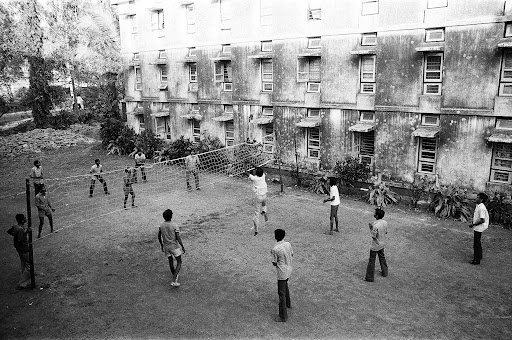
I was visiting H5 after over 35 years. My wife was accompanying me and I was keen to show her my room and relive memories of some of the best times I have had in my life. My first impression as I walked in was that the hostel looked a much smaller place than when I lived there. Happens all the time! Places that looked larger than life when we were young appear to shrink with age. Walking the corridors and going up to ‘my’ room, I had the strange experience as if the hostel had frozen in time since I departed. Nothing much had changed except time had taken its toll. It was late evening and we spoke to a couple of students who were hanging around in the wing and I was astonished at how much the ethos of the denizens had changed. The wing (12 or 16 rooms) was a group that banded together and evoked fierce loyalty. We freely walked in and out of each other’s rooms and knew each other as brothers. We knew where they were from, their family members, what their parents did, etc. We especially knew their likes and pet peeves which we used to pull their legs in impromptu ‘cack sessions’ in the rooms. It seemed to me that there wasn’t such level of bonding amongst wingmates these days. The folks we spoke to just knew that a particular room occupant was from Bihar and was in a particular year. Wings and the space in between was a perennial hive of activity. Every evening after tiffin, the Volleyball, Football and Basketball courts were filled, while several hangers-on stood around awaiting their chance to play. That inevitably created the opportunity for someone from an upper floor to empty a bucket of water on their heads. A round of gaalis would follow, with folks demonstrating the expanse of their vocabulary and imagination. All in good spirit of course, before the decibels of the throat were drowned by those of the stomach at 7.30 pm. Everyone would promptly troop to the mess in good cheer. These days it seems that the internet and online gaming has taken its toll and the courts between the wings bore signs of not having been used in ages. Through the year, the campus witnessed intense competition between hostels in various sports. This was mirrored within each hostel in the form of inter-wing competitions that were fought with similar levels of intensity. It struck me how the open plan of the hostels was designed to encourage us to interact. When I mentioned the decline in level of engagement to today’s students, they only asked that I visit the newer hostels which were built in a closed plan (probably to save space) and see the difference. It appears that residents hardly know each other – much like occupants of neighbouring apartments (flats) in a condo (housing society) in any modern city. That would be a sad outcome in the pursuit of conserving space and increasing the occupied density. This is something I hope the architects of new hostels take time to think deeply about.

Hustlers and Visionaries

Looking Back with Mr. Sharad Saraf: IITB in the ’60s

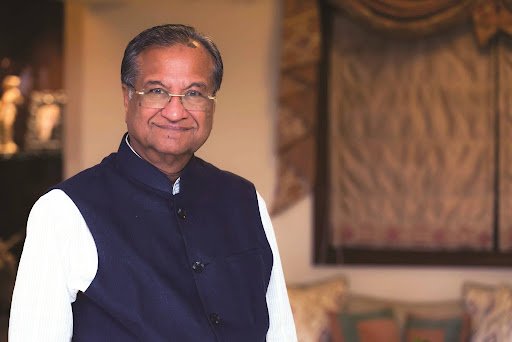
Interviewers: Adil Khan, Samyak Shah This interview was conducted as part of Department of Electrical Engineering’s “Alumni and Corporate Engagement” initiative. Check out the Department’s official student newsletter at this link.   Mr. Sharad Saraf is an alumnus of IIT Bombay (B.Tech. ’69 Elec. Engg. H2) and has also served as a member of the Board of Governors (BoG) of IIT Bombay. He is the Chairman cum Managing Director of Technocraft Industries, an established multinational industrial house which he co-founded along with his brother in 1972. Mr. Saraf has headed several chambers of commerce and is also the current Chairman of the Board of Governors, IIT Jammu. He is also a founding member of the Electrical Engineering Student’s Association (EESA) and hence, we decided to talk to him about his experiences and also find out how life was at IITB in his undergraduate days.   As an alumnus, can you let us know what life was like at IITB in your days? We were very carefree and relaxed. We did not have so many cultural and other events. The campus was lush green with a very pleasing ambience. There was a great bonding among the batch mates mainly because there were no other disruptions like mobile phone, laptops etc. What kind of extracurricular activities did students participate in those days? Our extra-curricular activities consisted of inter hostel, inter IIT sports competitions, various types of inter hostel activities, hostel day etc. We also produced very high quality professional plays which were staged in Tejpal Auditorium, Mumbai. There was great stress on sports.   How was the faculty – student interaction back then when the batch strength was lower? Faculty – student interaction was very personal. The professors in the department knew almost all the students. The faculty members were ever ready to meet the students or resolve any issues.   How did the idea of forming EESA (Electrical Engineering Students’ Association) come about? At our time when I was in my 4th year, I found that there was a very vibrant Chemical Engineering Students Association. So I wondered why we did not have a similar association for the Electrical Department. I discussed this with senior professors like Hariharan, Balakrishnan, Mukherjee among others and they were extremely kind and helpful.   What were the plans that you had while forming EESA and in what manner did the department support it? The main plan was factory and plant visits that would enhance student’s knowledge of electrical engineering. For example, we visited Tarapur Atomic Power Station and a factory in Vadodara. There were also a few other visits. These visits were the source of bonding among members and we also had interesting lectures. The faculty was extremely co-operative and never said no for any program or event.   What were the factors that affected career choices in those days and what went behind you choosing the path of entrepreneurship? In those days the most favorite choice was to go to the US for higher studies. Almost 70% of my batch mates went to the US. Those who stayed back did so for various reasons like family issues, financial conditions, family businesses or simply the desire to do something in the country. I could say that I was kind of a born entrepreneur. Even during my stay in the hostel, I had set up small commercial activities which were great fun and also well liked by my hostel batch mates. I came from a traditional Marwari community and hence I had it in my DNA. After graduating, I worked in a factory manufacturing electric motors, and then in 1972 I established my own business.   Looking back, how was the entrepreneurial scene in the 1970s, especially at IITB as compared to what it is now? In those days there was hardly any entrepreneurial spirit in our IIT students. There was no SINE or IT Sector. Hence almost all students preferred to go for professional jobs.   How did you familiarise yourself with taxation, personal finance and other things that are important in daily life but aren’t taught in the IITB classroom? Many people have asked me this question. All non-technical services like taxation, personal finance etc. are available through chartered accountants and other professionals. I do not think there is a great need for any formal teaching of these subjects since there is not much creativity involved in them but general knowledge of taxation and personal finance comes on its own by experience.   Could you please illustrate how the IIT Bombay network and peer group help you throughout your career? Till mid 1980s there was no IITB networking except for among close batch mates or hostel mates. There was no email, mobile phone etc. and hence networking was restricted to landline phones. However, in the 1980s I started the IITB Alumni Association (Bombay Chapter). This became quite popular and finally spawned IITBAA and PAN IIT Alumni Association. We organized a monthly alumni meet in the Institute of Engineers, Mahalaxmi on the last Saturday of every month. We also did a lot of events including organizing an annual day on the last Sunday of every year.   What would be your advice to students who are currently at IITB? Basically all IITB students are quite creative, intelligent and dedicated. My advice is to remain focused, and have a CAN DO attitude. You will also find opportunity in every adversity provided you look for it intelligently.   We came to know that you are soon coming up with a book on your life experiences. Would you like to share anything about that? Yes, my book is under printing now. It is called Engineering Karma and contains certain important events and experiences from my life which carry some message. There are also chapters about my experience at IIT Bombay, the first 4 years of my career and also my subsequent business journey.

Matters of Mischief

The Word is Grease

  This was our fifth year. Knowing that we’d disperse the following year, we maximized the fun aspect of our hostel and wing life – in the silliest of ways (looking back). We all wore saffron lungis that year and most of us donned beards. Raja shaved his head in a Mohawk – that’s Raja! Alfred, that athletic footballer, returned from home one weekend with a pin in his nose. He had sawed off the one ‘leg’ of the pin and fit it perfectly around his columella. With his frizzy hair and his largish flared nose he looked like some tribesman from Africa. Much to our amusement the pin became part of his jewelry whenever he was in the wing. It just kept getting stranger and stranger. The phrase “The word is grease” got coined (perhaps at the inter-IIT meet that year) and was used frequently in the wing especially while guys played bridge and somebody got finessed. On the last day of MI 82, we were hanging out in the wing and Alfred put the ring on his nose. With his saffron lungi and bare chest, he looked like a sadhu, and was promptly named ‘Grease Baba’. One has to do something with a Baba, but what? Before long we were out on a procession from H8 A wing 2nd floor towards the Gymkhana where the concert was going on. Alfred kept a straight serious face, eyes rolled up as though in a deep trance, nose flared, pin on. A veritable religious cult figure, flanked by his “disciples”, one of whom held an umbrella over him for added effect. There were guys in front of him clearing the path for the approaching holy man. And guys behind him all shouting alternatingly, “Grease Baba ki Jai!” and “The word is Grease!” By the time we reached the Gymkhana grounds more of our hostel mates had joined and we had a good 15-20 people in our procession. The non-IIT crowd looked bewildered and didn’t know if this was a prank or whether some crazy religious group had come to MI. We proceeded to the Main Building. We still had our procession going strong with guys singing bhajans and the two chants in between with total enthu. When we reached MB, Grease Baba was offered a chair. Grease Baba looked very serious as he sat, as though in deep meditation, and we all played our part to keep it going. By now we had attracted some of the local non-student folks around us too. They must have thought that a religious figure had indeed come to the campus. Two lads, perhaps about 10-12 years old, were standing next to me. One asked the other as he pointed to Grease Baba, “Paai padaicha ka?” [Should we prostrate and touch his feet?] I encouraged them. As they approached him, Alfred realized what they were about to do. That embarrassment snapped him out of his trance and he stopped them. It took two little kids and their innocence to put an end to this elaborate charade!  

Scroll to Top