Roomies, Roads & Rites

Roomies, Roads & Rites

A Casual Reminiscence of an NSS Trip

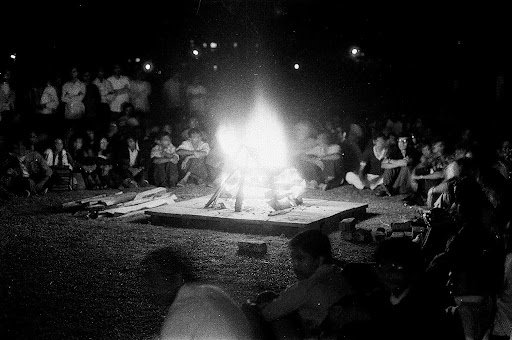
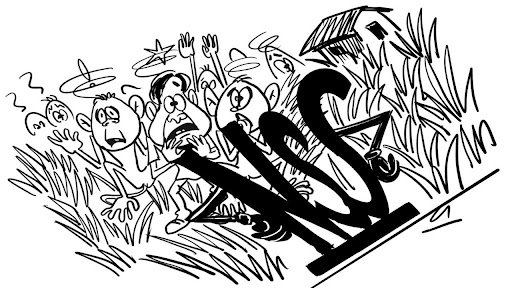
  Somewhere in the second semester, we were told that we need to have a field trip to gather the mandatory 100 hours needed for social service in the first two years by Prof Major. And since we had chosen NSS (because we didn’t get selected in either NSO or NCC or maybe we had thought NSS would be easier) …this was the googly Major kept for us. So it was decided at the end of 1st year, and before the 2nd year began, we would have to go to some place in Kalyan and spend some days or a week doing social service, which would be considered our field work. And so it began … on a hot Saturday morning … and we realised then that Prof Major was actually a Major when he made everyone line up at every station in Bombay where we had to change trains and count the heads. I remember Lottery (Sachin Pachlag) was responsible for tapping the heads of the participants and reporting to Major every time this happened. I think he felt that the job was nothing bigger than counting chillars when you already know how much money you have. But he moved on and so did we. We kept wondering what else was in store for us on the trip. Eventually, after 3-4 hours of train journey, we reached a remote village in Kalyan. And we visited a farm where after taking the tour we understood that we have to bring drastic changes … I felt the person who was explaining was waiting for ages for our batch of vanar sena to come and build the Adam’s bridge for Lanka, basically bring a revolution to uplift the state of that farm, and that means taking up the very tools our farmers or the construction workers use and get to use them effectively to earn our daily meals. That day when we walked around 15 kms on our way back to the camp, many of us thought when we can use the grey matter we will rather not use our muscle matter or lack of it. And so some of us started having medical issues – or should I say developed overnight, things like unknown rashes in their hands and legs, some even done by self-inflicting wounds. That night was also, I believe, when Prof Major witnessed some core language of the IITians … used inside the hostels only. He was quite taken aback, (what else he expected to hear, sadguru vachan like Ramananda Sagar at every end of Ramayan episode?). The mind and weather both were hot and so the camp obviously was indeed going to witness a revolution. And on the 3rd day by evening it was clear the revolution was not in the farm but in our camp itself. Major General had to bow down to the army of Vanar Sena who refused to build the bridge and conquer Lanka in the expected masquerading episode. So it was decided people who think they cannot sustain the physical demands of the camp can leave by giving the right reason. Of course, we can always have the right reason for everything. (Who says IITians don’t run away from big challenges, here I was witnessing it). And I was just wondering how many possible reasons people made to get out of the camp that evening: stomach pain, leg pain, ear pain, pinky finger pain, difficulty in breathing, history of asthma, (someone’s grandma had it so he feared he would too in these conditions), food allergy, white rashes, blue rashes, brown rashes, joint pain, throat pain, nose pain, etc (I did wonder even a professional Doc would wonder what these are). I was one of the few who stayed on, not because we wanted to take up the challenge – after all I was an IITian too – but because we thought we didn’t want to spend another 100 hours during academic sessions in second year of NSS in second year, we did fear the XX grade. Interestingly, the remaining few days were completely different. Prof Major has actually become the professor we wanted him to be, and he had announced “you guys enjoy and have fun, no more rules, no more demands, no more field work, no more bridges” So the few of us who were there, partied well. We had to cook though, which was a better deal than taking up field work, and of course we got to eat aplenty. We did make peace with Ravana eventually I would say. So no need for the bridge, I remember (Samrat Ghosh) from EE was an expert in making chapatis even during those early years. Some others were pro in the food business too. And we cracked a lot though we missed the OH component – but that’s okay we completed the necessary NSS hours.
Roomies, Roads & Rites

Rites of Passage

1. Surviving Two Cultures About a week or two after I became a resident of Hostel 4 on the campus, for some reason I was a bit late getting to the mess for dinner. Usually, a whole gang of about 12-15 of us freshies would gather, go to the mess, and sit at the same table together – for the same reason that Herrings form large shoals, the larger the shoal the lesser the probability of any one individual being eaten by a marauding Shark! But that day, horror of horrors, the only empty seat at a table I could see was smack between two of those senior sharks! I tried to be as invisible as I could and finished eating at a blazing speed, my right hand was a blur – like the vibrating wings of a hovering hummingbird – as it moved from plate to mouth! As I finished, I heard the guy on the left commenting on my “right-hand-method” of eating using only one hand, especially my “3-finger-technique” of breaking the bread (chapati) – half in admiration, half mocking! That half mocking/half admiring remark was a trivial but significant symbol of a gulf – which to my great surprise, I had sensed after starting my life in H4. My cloistered life until then had been spent in a culturally completely homogeneous setting. Of course, cliques formed even in that homogeneous environment, and you became part of some and not of others but that happened (when it did) only over time after having gone through some shared experiences first and then making choices. On the first day, there was no apriori assignment of labels defining who belonged together, and who did not. What I sensed here seemed different. The best way to describe it would be by plagiarizing C.P. Snow’s lines from his famous Rede lecture in Cambridge on Two Cultures – and I quote (Replacing Snow’s words with the terminology which seemed prevalent at that time) ——– “Pseuds” at one pole—at the other “Vernacs”, and as the most representative, the “Ghats”. Between the two a gulf of mutual incomprehension—sometimes (particularly among the young) hostility and dislike, but most of all lack of understanding. They have a curious distorted image of each other. ——– By virtue of your school and your name (in that order of importance) e.g whether you were from Rammohan Vidyamandir in Girgaon vs Campion on Cooperage Road just about 10 minutes’ drive away, it seemed you were assigned a certain stereotype and were expected to display a certain set of beliefs and behaviors. For example, it was expected that the former couldn’t have heard of Jim Morrison and the latter needed to bring a chair with a hole in the seat from home to place over the squatting toilets in the hostel! It’s not that anybody explicitly called each other names, but while being ragged I was often categorized as soon as I named my school and was expected to conform to a stereotype. For a freshie – not just me but all those who had joined along with me, this was very confusing. Here we were, for the first time breaking out of the protective cocoons our parents had built around us, confused about where we belonged in an ecosystem never before seen by most of us and a lifestyle choice seemed to be being forced. None of us cared much for being branded with this brand or that without fully comprehending what it meant. It was almost an identity crisis – Would I be called a confused idiot if I confessed that I love Talat Mehmood and also Jimmy Hendrix? What would I be branded as, if it was found that I played Kabaddi for my school and not tennis? Ideally, I would have liked to belong to both groups, but it looked like attempting to do that might in fact result in being neither rather than both! Of course, there seemed a third choice – a subculture that was then termed “commies” that ran parallel these two. But being part of that meant I had to be angry all the time at everybody and everything but most certainly at something called “Establishment”. Although it wasn’t clear to me what exactly that referred to, it seemed that this “establishment” had been more than generous to all those who were so angry at it – charging them Rs 8 per month for hostel rooms and levying tuition fees of (if I remember correctly) Rs 25 per month at the most exclusive seat of learning in the country! Soon though a crisis came to the fore over the clandestine shows of blue films in the hostel – with each side accusing the other of misusing hostel funds which lead to a big fight (bigger and more asinine than the Big Fight between Vitalstatistix and Cacius Ceramix in Asterix and the Big Fight by Goscinny and Uderzo) in the Hostel mess. That idiocy sickened a lot of those who too didn’t care much about this Two Cultures business. And thus emerged a Third culture of those who didn’t subscribe to either of the original two. Although that did not necessarily address C.P. Snow’s original concern about “a gulf of mutual incomprehension”, “lack of understanding” and “a curious distorted image of each other”. Instead of two, now there were three! But at least for the confused freshies like me there was one more option! 2. Metamorphosis In the first few weeks of becoming a resident of Hostel 4 (and a student of IITB) it became very clear to me (and to pretty much most of my other fellow freshies) that we really weren’t who we thought we were prior to coming to the campus! The sieve of JEE had strained out most but a chosen few of us and that meant that most of us were (or were sufficiently deluded to believe we were) pretty special “somebody” within our respective backyards. Suddenly now there were

Roomies, Roads & Rites

H5 Thirty Five Years On

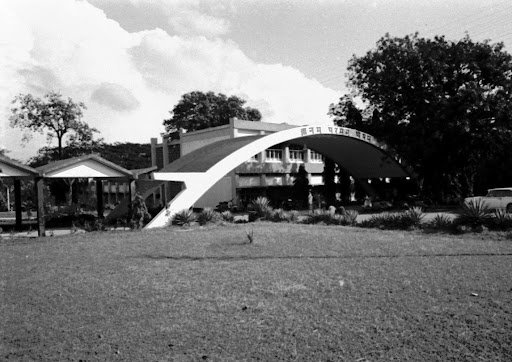
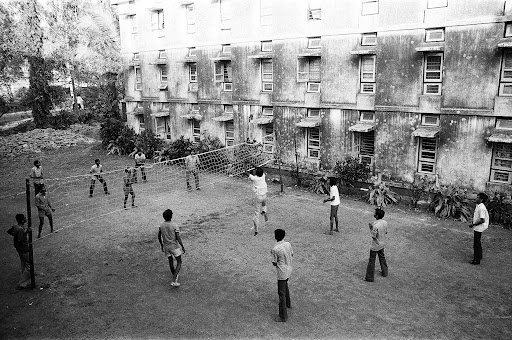
I was visiting H5 after over 35 years. My wife was accompanying me and I was keen to show her my room and relive memories of some of the best times I have had in my life. My first impression as I walked in was that the hostel looked a much smaller place than when I lived there. Happens all the time! Places that looked larger than life when we were young appear to shrink with age. Walking the corridors and going up to ‘my’ room, I had the strange experience as if the hostel had frozen in time since I departed. Nothing much had changed except time had taken its toll. It was late evening and we spoke to a couple of students who were hanging around in the wing and I was astonished at how much the ethos of the denizens had changed. The wing (12 or 16 rooms) was a group that banded together and evoked fierce loyalty. We freely walked in and out of each other’s rooms and knew each other as brothers. We knew where they were from, their family members, what their parents did, etc. We especially knew their likes and pet peeves which we used to pull their legs in impromptu ‘cack sessions’ in the rooms. It seemed to me that there wasn’t such level of bonding amongst wingmates these days. The folks we spoke to just knew that a particular room occupant was from Bihar and was in a particular year. Wings and the space in between was a perennial hive of activity. Every evening after tiffin, the Volleyball, Football and Basketball courts were filled, while several hangers-on stood around awaiting their chance to play. That inevitably created the opportunity for someone from an upper floor to empty a bucket of water on their heads. A round of gaalis would follow, with folks demonstrating the expanse of their vocabulary and imagination. All in good spirit of course, before the decibels of the throat were drowned by those of the stomach at 7.30 pm. Everyone would promptly troop to the mess in good cheer. These days it seems that the internet and online gaming has taken its toll and the courts between the wings bore signs of not having been used in ages. Through the year, the campus witnessed intense competition between hostels in various sports. This was mirrored within each hostel in the form of inter-wing competitions that were fought with similar levels of intensity. It struck me how the open plan of the hostels was designed to encourage us to interact. When I mentioned the decline in level of engagement to today’s students, they only asked that I visit the newer hostels which were built in a closed plan (probably to save space) and see the difference. It appears that residents hardly know each other – much like occupants of neighbouring apartments (flats) in a condo (housing society) in any modern city. That would be a sad outcome in the pursuit of conserving space and increasing the occupied density. This is something I hope the architects of new hostels take time to think deeply about.

Roomies, Roads & Rites

Nostalgia Nuggets

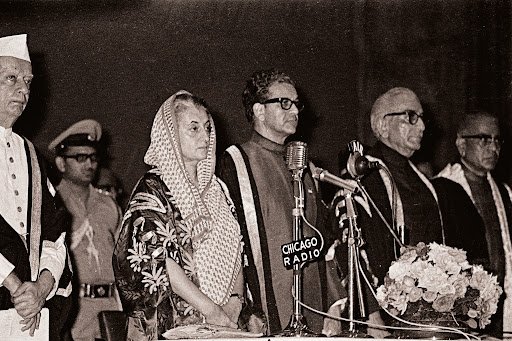
1. Missing the First Degree I had to miss my B.Tech convocation due to my stupidity on Janmashtami in 1973. I was still on the campus pursuing M.Tech. Some of the guys in the hostel had strung a rope across two wings on the second floor for the handi on Janmashtami day. After dahi-handi was over, I accepted a dare to cross the span on the rope using my hands and legs. I succeeded. But I’d forgotten that the rope would sink under my weight and ended up having to literally haul myself up for quite a long part of it. Ended up pulling my belly muscle and missing the Convocation which was the next day. The dare was for a princely sum of Rs. 5. Mrs. Gandhi was the Chief Guest at the convocation. But for the activity involved in winning Rs. 5, I’d have received my degree from her. 2. Tarzan’s Lakshman Rekha First the battle of wits between R. Krishnaswamy (aka Sluggo) and Premji Varsani (aka Tarzan). First a little background information. In H5, we used to have single seated rooms. Each room had a wall on one side and a partition on the other side. The partition was open at the bottom (about 4”), and at the top. The top of the partition was approximately 7’ from the floor. It was open from there to the ceiling. So light and sound on one side was visible and audible on the other side. The two students each living on one side were called “partners”. We lived on the second floor of H5 in the front wing. Our wing had 12 rooms. Tarzan lived in Room 267. His partner Ashok Mulani lived in Room 268. Mulani was in EE, Tarzan was in Aeronautical Engineering. Mulani rarely lived in his room. When on campus, he would live at the Computer Center writing gaming software to play games on the Minsk 2 computers. But during exam weeks, he would live in his room and try to get ready for exams. Getting him ready was Sluggo’s responsibility, who would try to teach him in 2–3 weeks what had been taught over the semester. Mulani would use these coaching sessions to prepare his cog sheets more than understanding the subject matter. How he used them and survived the exams is between him and his Creator. But I digress. Often these coaching sessions would be loud and go late into the night. That would disturb Tarzan, who also needed to study. Sluggo also used to laugh in a unique loud non-stop “Ha, ha, Ha, Ha” laughing fit. That would really drive Tarzan nuts. So, sometime in fifth year, he got hold of a chalk and used it to draw a line in the veranda outside the rooms. It was just at the point where Mulani’s room ended. He called it the Laxman Rekha, referring to the Ramayana description of the protective line drawn by Laxman to protect Seeta before he set out to look for his brother Ram. Sluggo was warned that if he ever dared set his foot across the line drawn by Tarzan, Tarzan would inflict a lot of physical pain on him. Sluggo would retaliate by showing up in our wing at random times and stick his big toe right up to the line without crossing it, then call out to Tarzan telling him he was there and planned to cross the line. Poor Tarzan would drop his books and come out to defend his territory. This went on for a semester before Tarzan realized that he was wasting more time defending his line than would be the case if he just let Sluggo freely come and go. So he erased the line after a semester. 3. Snacks & Larders The story about sweets and snacks involved another wingmate, M. N. Kale of Aero. Many guys in our wing were Bombayites. They would go home for the weekend on Friday night and return on Monday morning. During exam periods, everyone would hit the books and stay on campus on weekends too. Family members of some of these guys used to come over to visit them on weekends and generally bring some snacks and sweets for the student they were visiting. Usually, the quantity was generous enough to allow sharing the goodies with others in the wing. We used to eagerly wait for the visitors to leave, and as soon as they left, we would descend on the room of the student whose family had just departed. We would get our share and return to our rooms. If the student decided to accompany his family to the bus stop, he would leave his room unlocked to allow us to enjoy the snacks without having to wait for his return. We would make sure that his share was left behind for him to enjoy when he returned. Mr. Kale too was one such Bombayite. During one exam period in our third year, his family came over and brought a lot of yummy snacks and sweets. When they left, Kale hid all the snacks in his closet, locked his room, and went to Y-Point to see off his family. Kale’s partner too was away for the weekend, making entry to his room impossible by scaling the partition from his partner’s room. All of us were livid at Kale for locking his room and hiding the snacks. One of our wingmates, Mr. Arvind Gogate of Civil Engineering, was a very slim and agile fellow. At our goading, he climbed up the front door to the narrow opening above the doors of our wing. This opening was just wide enough to allow entry of pigeons. But Gogate squeezed through the opening into Kale’s room, opened his closet, got all the snacks out, and passed them through the narrow window beside the door. After passing everything out, he exited Kale’s room from the main window to the back of the room, crossed over to the

Roomies, Roads & Rites

War Piece

There used to be, and maybe there still is, a quota for foreign students. The IITs used to attract students from all over the global south. Hostel 4 was lucky to get its share of foreign students. They used the H4 Canteen a lot and when the canteen boy ran out of supplies, some of them would give money on credit to the canteen boy to buy more supplies. Two such benefactors were from the Middle East – one from Iraq and the other from Iran. They spoke the same language and became good friends as most of the Indian students would go home on weekends or during the winter and summer breaks leaving mostly the foreign students to give each other company. When the Iranian Revolution happened in January 1979, a group of Iranian students from all hostels got together and held an exhibition in the Convo Hall on the atrocities by the Shah of Iran and his brutal Savak secret police. The pictures in the exhibit were blood curdling. I had never seen such pictures of brutality before and I remember the exhibition pictures to this day. Then, Iraq invaded Iran in September 1980. This led to a great dilemma for our Iraqi and Irani friends in H4. One had a brother in the Air Force, and the other had a brother in the army of the opposite side. The brothers were fighting each other, and here they were, stuck together in a foreign land without much other support. I could see the tension and confusion in their eyes as they struggled to reconcile their situation in India with what their respective brothers were facing in the Middle East. I graduated in 1981 and left IIT Bombay. I don’t know where these friends ended. The war lasted eight long years. I don’t know if their friendship survived the war. All I can say is that this experience influences my outlook on the Middle East as well as wars in general to this day.

Roomies, Roads & Rites

Timeless memories of H10

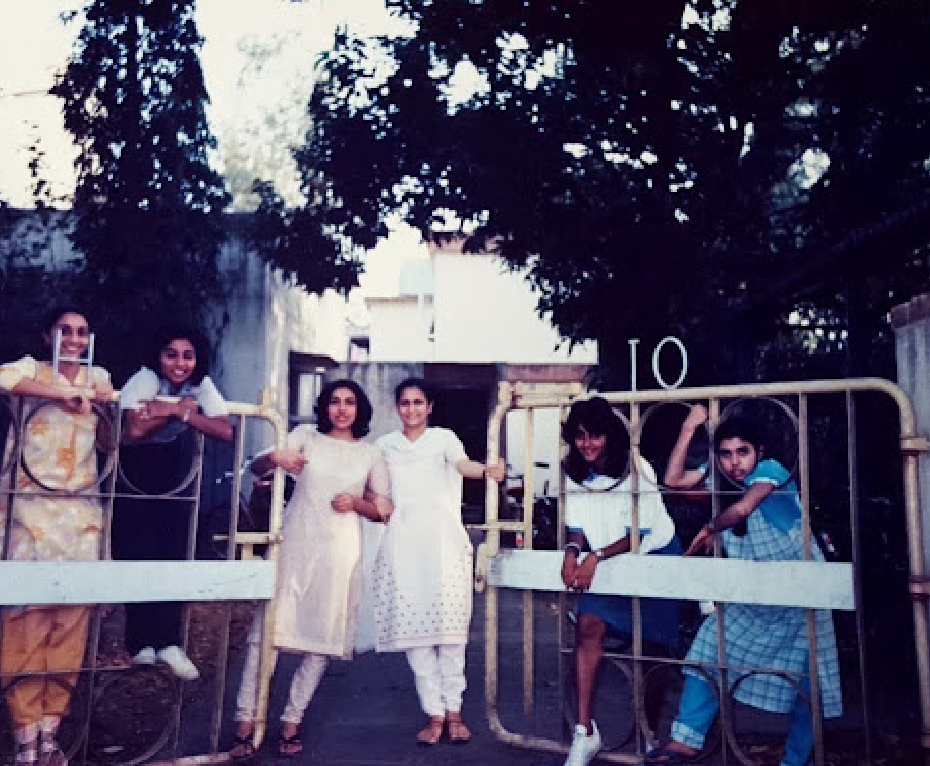
Photo Courtesy: Many of the photographs used in this article are from the photo archive of Project Evergreen. It has been 30 years since we graduated, and yet the thought of my wing brings an instant lifting of the spirit and a bubble of laughter in my throat. That this has lasted several decades has much to do with the strength of our shared memories and a sense of kinship that transcends time and distance. I remember entering the small, moss-stained undergraduate women’s hostel (the old H10/LH) and being immediately attacked by a ferocious swarm of mosquitoes in the dilapidated visitor’s room. I didn’t know it then but H10’s location was highly strategic – close to the main gates, YP, and to some of the departments certainly, but also close to the professors’ quarters and far away from the nine undergraduate men’s hostels. This meant that we could get a quick snack at RK/SP if funds permitted, and the ChemE/Meta/chemistry junta could theoretically wake up at 8.20am for an 8.30am class. Unfortunately this also meant that we bumped into said profs unduly frequently and that we were a substantial distance away from the only food available at 2am (Rainbow/H8). Also, doubtless as intended by the unknown builder, our location put a crimp in inter-hostel social activities both at the group and individual level, with some notable exceptions. I recall meeting the fourteen other women who comprised the class of ’92. Possibly because we were such a small group, we couldn’t be described as homogenous – each of our 18-year old selves stands out distinctly in my memory. We had of course, the ‘Bombayites’ and ‘non-Bombayites’, a large contingent from technical/scientific family backgrounds (TIFR/BARC/Bhilai), introverts and extroverts, music-lovers and foodies, fitness enthusiasts and couch potatoes, cleanliness fiends and slobs, early risers and night-owls…we spent the next few months getting to know each other and developing immunity to the mosquitoes and hostel food.   Photo courtesy: Author We took long walks to Vihar lake in evening, parked in each other’s rooms ostensibly to study but really to talk and laugh about everything under the sun, loudly criticized each other’s taste in room décor and music and clothes (and then borrowed those same clothes), grumbled about the mess food, and generally tried to adjust to the goldfish bowl of being part of the tiny female contingent in our year. I remember Monday lunches being the highlight of the week – the ‘Bombayites’ went home and brought back home-cooked delights – besan laddoos, alu parathas, dahi rice…The wonderful thing was that there was always someone to talk with, walk with, laugh with, grumble with, sing songs loudly off-key with, cry with, have long and quite random discussions with, do crosswords with… There were birthday bumps and bumps for the sake of it, dressing up for dandiyas and ValFis, enthusiastic participation in the PAFs, blunders through the dark campus for the THs, frantic last minute cram sessions before endsems …we went to cheer our wingmates singing at “Surbahar’, took part in Mood-I and Inter-IIT, had ‘schol’ treats, tried to drum up enthusiasm for various hostel activities (I still remember my friends working to help me revive the hostel magazine). Some things were definitely special to H10 – the watchman at the entrance who would only call a hostelite if the visitor knew the room number (and then he boomed the room number at the top of his voice so that everyone knew who was being visited), the curfew at 11pm when all male visitors had to depart the hostel, the lack of economies of scale that required our mess secretaries and maintenance coordinators to perform small miracles to improve the mess food or to effect repairs. I remember the pay phone at the entrance that stopped working frequently – any girl wishing to call her family had to go to MB or YP. I distinctly recall the frog that adhered obstinately to the wall of the 3rd floor bathroom and stared at anyone taking a bath (the use of hot water dropped dramatically during its residence), and the gigantic flying cockroach that emptied out our wing in seconds. I was delighted to see the new and improved H10 and to know that the number of women has increased substantially even if the percentage remains low. Washing machines, laptops, computer rooms – these were unthinkable in the late eighties in H10. It makes me feel a bit like a dinosaur, albeit a benevolent one. But I confess to nostalgia for the little, decrepit building that we spent 4 years in – or at least for the good times, the silly jokes, the tears and the memories. Those years laid the foundation for a lifetime of friendship and yes, sisterhood. To this day, when I speak to any of my wingmates, however infrequently, we pick up where we left off thirty years ago despite varied career paths, marriages, kids and disparate interests. All it takes is a few minutes, a couple of anecdotes, a characteristic laugh or phrase – and I’m back in H10, in room 319.

Scroll to Top