Breaking the Mold

Your blog category

Breaking the Mold

Empowerment – Not Just a Pipe Dream!

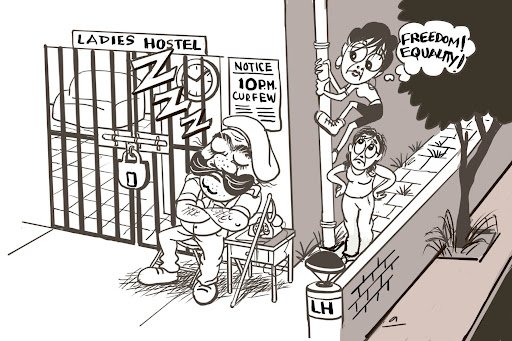
H10: Lessons Beyond the Classroom IITB was a very special place. H10 at IITB was an even more special place. In my first semester, my brother was in town on a visit. We went out to dinner with a friend. It got pretty late by the time we finished close to midnight. By then, worries had been expressed numerous times: What is the closing time in your hostel? They were far more anxious than I was, which was precisely zero on a scale of 0 to 10. That amazed them. When I said, “There’s no such thing,” they were incredulous. How could a girls’ hostel exist without restrictions? They were mightily impressed. All the way from Bandra to Powai, as they dropped me back, they kept asking the same question. This was 1980, and the notion that hostels for women could exist without such rules was simply difficult to believe. Even today, many working women’s hostels have curfew times. Little did they know how my seniors among whom was one famous “hunterwali” , had fought against unfair restrictions. I had heard the stories. I knew about the name change (LH to H10), the lifting of gender-biased rules, and how these remarkable women had defied restrictions by climbing down water pipes and leaving the hostel after the gates were locked. Inspired by these stories, I remember climbing down from the first-floor corridor myself, using the pipe for support, just for the fun of it. But it was not simply about curfew. In many places, men were not allowed inside women’s hostels—not even fathers, brothers, cousins, or classmates. In H10, boys could visit, provided they were met and escorted by a hostel resident. It seemed perfectly reasonable. Why should classmates not be able to study, chat, or spend time together simply because they were of the opposite sex? The atmosphere in H10 was one of genuine gender equality. Although I came from a background where this was taken for granted, I learned that it was not the norm everywhere. More importantly, I learned that unfair rules could be questioned, challenged, and changed. In some way, this undoubtedly contributed to a sense of empowerment. A few years later, while staying in a hostel at an institute in Bangalore, I experienced this lesson firsthand. Friends both women and men would visit in the evenings, and we would sit on the lawn or in my room discussing weekend hiking and climbing plans. Unknown to us, the administration had imposed restrictions on visitors. I found out when a friend’s mother came to invite me to her daughter’s wedding. She arrived with the invitation card in hand, only to be stopped at the gate because “visitors were not allowed after office hours.” I was furious. I confronted the administrative officer. He insisted the rules were for my protection. I pointed out that I was well over eighteen and that he had no right to dictate my personal life or whom I could meet in my free time. Eventually, he said he could do nothing and suggested I meet the Director. So I did. I asked simple questions: Do you want social visits to take place during office hours? I am over eighteen. How can you restrict my life outside working hours? When he could not answer, he fell back on the familiar excuse: “It’s a security issue.” That opened the door for another question. How exactly was a fifty-year-old woman carrying a wedding invitation a security threat? Finally, he agreed to my proposal: visitors could enter if the hostel resident met them at the gate and took responsibility for them. I refused to leave until he picked up the phone and instructed the administrative officer accordingly. It was as simple as that. Ask the right questions, and if there are no answers, absurd rules can be changed. The lessons learned subconsciously in H10 came in handy every time I encountered something unfair. Had H10 accepted those restrictions meekly, I might have assumed that “that’s just the way things are.” But H10 taught me that things did not have to be that way. For that, I will always be grateful.  
Breaking the Mold

Origin of the Ladies Hostel on the IITB Campus

  The first girl to join the B.Tech. program of IIT Bombay was Tejaswini Saraf (now Kanvinde). She joined in 1962 after completing 11 years of High School plus 2 years of science college (Int. Sc.). Hence she was admitted directly to the second year of the B.Tech. program as was the IIT practice then. Since there was no ladies hostel on the campus at that time, she stayed temporarily as a guest with the then professor of Civil Eng. Mrs. Shakuntala Bhagat. At that same time there were two other girls on the campus who were pursuing their MTech. degrees. Since they were also working as lab assistants in their department at the same time, they could get an apartment as an employee. Their names are Pushpa Watve (now Apte) and Prabha Ketkar (now Deo). So the institute decided to accommodate Tejaswini with these two girls that first year. Hence there was no need for a ladies hostel in 1962. In 1963, five more girls joined the B.Tech. program. Nandini Gurjar (now Jog) joined after her BSc. Degree (11 years of highschool + 4 years of science degree course). Hence she was directly admitted to the third year of the B.Tech. program as per the IIT practice then and became Tejaswini’s classmate over time. Sheela Koppikar (now Warty) joined after completing Int. Sc. just like Tejaswini and hence was admitted to the second year of the B.Tech. program. The remaining 3 girls who joined in 1963 are Kusum Apte (now Chandragupta), myself Neela Gavankar (now Mudgal) and Rekha Rege (now Nadkarni). We three joined after FY. Sc. (1 year of science college after 11 years of High School) and hence were admitted to the first year of the B.Tech. program. So now there was a need for a ladies’ hostel. Constructing a new building was impossible in the time frame and not financially viable for such a small number of girls. Hence they decided to give us an apartment on the ground floor in a Type III building located centrally in the Asst. Professors’ quarters. Each apartment had two bedrooms, a bathroom, a living room, a separate dining area, and a kitchen. Each apartment could accommodate five students. The living room and the bigger bedroom could be equipped as double rooms and the smaller bedroom as a single room. However, that first year we six girls lived in one apartment and each room was made a double room. Each girl had a bed with a mattress, a writing table and a small steel cupboard as a wardrobe plus book shelf. There was a good size dining table in the dining room where we could eat together and chit chat, share our daily experiences, etc. Our warden was Ms. Leela Rao who was a professor in the department of Physics. We had a resident lady cook named Janabai assigned to us full time and a part time maid named Sheubai who used to commute daily from her home for all cleanup as required and laundry. So, we really lived there like a family and could dedicate our time to our studies as required without any problem. Plus, we were lucky enough to have a family on the campus who went out of their way to provide us some social time during that first year. Professor Parulekar of Mechanical Engineering and his wife Kamal Tai, as we called her, used to invite us for an afternoon tea/snacks and chitchat as often as they possibly could during our first year. We really relished that and have fond memories of the same. Many thanks to the Parulekar family. From 1964 onwards more girls started joining not only the B.Tech. program but also the M.Tech., M.Sc. and Ph.D. programs. The Institute then started giving us more flats as required. Things started becoming more complex. One cook and one maid were not enough, but still somehow managing. On the other hand from 1966 onwards girls started graduating and leaving the hostel. Tejaswini and Nandini were the first two girls to graduate with a B.Tech. degree from IITB. (Even though Pushpa and Prabha did not live with us in our hostel, they too graduated in 1966 and became the first two girls to receive an M.Tech. degree from IITB. And another girl Radha Natarajan, even though was not among the first 6 original residents of our hostel, also graduated in 1966 and became the first MSc. girl to graduate from IITB. She had joined the ladies hostel in 1964 one year after us the first 6. Devaki (last name not known) who joined the ladies hostel sometime in 1965 or early 1966 to complete her Ph.D. thesis was the first girl to graduate with a Ph.D. degree from IITB.) So the hostel was continuing. Our cook Janabai was getting old and left. She was replaced by a male cook. In 1967 Sheela and some other girls graduated and left. I believe in 1967 our hostel consisted of 3 or 4 apartments with a capacity of about 20 students. The Institute realized that the things were getting out of control and now was the time to construct a new building. The construction started in 1967 right behind our building. In 1968 the last three girls of the first six occupants of the original ladies hostel namely Kusum, Neela (myself), and Rekha graduated with a B.Tech. degree and left. The remaining girls from the original hostel were then transferred to the newly built Ladies’ Hostel. Last but not the least, I want to mention here that all the six of us who were the first residents of the ladies hostel on this campus made full use of the knowledge gained at IITB after graduating from here. Most pursued graduate studies in their respective field of engineering either in India or abroad after B.Tech. Some first worked in reputable firms in India and then went abroad for graduate studies, some went immediately after B.Tech. After completing graduate degrees

Breaking the Mold

Rainbow Stories

Industrial Design Centre (IDC) has been instrumental in making me who I am — even more than the design education I received there, it provided me with a soul mate who helped me discover myself. I met Suhail Abbasi the day I came for the interview for admission to IDC in 1984. I never knew we would be close friends for 35 years and counting. He is more than a friend, a soul mate to be precise. We were in the same batch of 8 students of the first Visual Communications batch of IDC and bonded closely — because I, being from an Engineering background (NITK Suratkal), sought his help to execute artworks as he was from Applied Art background (J. J. School of Arts). In fact, all eight of us were very close as it was such a small batch then.  While Suhail and myself bonded closely we never spoke about our sexual orientation. At that point in time, I was not even out to myself that I was gay. I was deeply closeted and too scared to admit my sexual orientation even to myself.  I was deeply closeted and too scared to admit my sexual orientation even to myself.  Remember, it was the pre-internet, pre-cellphone era! Nothing was ever spoken aloud about sexuality, everything was hush-hush. If you are slightly effeminate you would be teased by your hostel-mates. I had to project at being ‘normal’.  It was a tough time hiding one’s innermost secret and pretending that everything was happy and joyful. It was a really painful time. After we passed out of IDC, Suhail and I remained good friends as we tried to go on our course of job hunting — he joined the film industry and I joined an institute for the hearing impaired as their Mass Media Officer.  It was only after three years of passing out, in 1990, when Suhail co-founded Bombay Dost, India’s first gay magazine, that I came to know of his sexual orientation, though I always suspected it. Very soon I came out to him that I was gay too. He coolly said, “Big secret!!” From then on Suhail and I bonded even more closely, we worked on the magazine together, and then went on to co-found The Humsafar Trust, India’s first gay organization, in 1994. He has been a consistent support to me all these years. From then on Suhail and I bonded even more closely, we worked on the magazine together, and then went on to co-found The Humsafar Trust, India’s first gay organization, in 1994. While at IDC, Ravi Poovaiah and Ajanta Sen were constant supporters. They kind of knew about Suhail and my sexual orientation, but they never asked any questions. Their silent support meant a lot. Of course, after we came out to each other, we came out to Ravi and Ajanta too and they continue to be amazing people who have even attended some of our gay parties! While Suhail continues to be on the board of The Humsfar Trust and also work as a creative director for many shows, I have managed to pursue my dream of making LGBTQ films and also found KASHISH Mumbai International Queer Film Festival, which over the past 10 years has become South Asia’s biggest LGBTQ film festival.  We both were in some way instrumental in Sec 377 being finally read down in September 2018, as petitioners challenging the law in the Supreme Court — Suhail being a petitioner along with The Humsafar Trust, and myself being one of the petitioners from Pravritti, the pan-IIT LGBT group. Now, IIT Bombay has Saathi – IIT Bombay, the campus LGBT group which is doing amazing work by bringing together the LGBTQ community and allies on campus. They also have a counselling helpline and organize several activities on campus.  Earlier this year Suhail and I were on a panel organized by Yaariyan, the youth LGBTQ group, along with Saathi — IIT Bombay. We reminisced about our early days on campus and laughed out loud about how closeted we were. But there were tears mingled with laughter. Tears of joy, that we have come so far in LGBTQ rights movement where it is not illegal anymore to be gay in India. Campuses are far more inclusive of diversity, and there are so many companies who have their D&I policies in place, to offer placements to LGBTQ persons.  I’m so happy that I met Suhail 35 years ago, and so thankful to IDC for having put me on my path to self-discovery and contribute in my very small way to the betterment of the rights of the community.  

Breaking the Mold

Women in IIT Bombay

(This article was written in October, 2017.) Writing about women in IIT, starting off with my memory of being there almost four decades ago, is a difficult task. And it is not because memories fade and things change, but because some memories refuse to fade and some things refuse to change. This is of import today because as I write this there has been an attack in a University on women students who were protesting against sexual harassment and the discrimination that they face on campus. They were fighting for more proactive measures by the University to address the harassment they faced from the men on campus, the fact that the streets were not adequately lit, and also that they were being locked into the hostel earlier than the boys and not being given similar food [1]. Over the last couple of years, as these voices of rebellion of women students have risen from across the country – DU, JNU, AMU, Mumbai University, Allahabad University, SRFTI, BHU … (and I am sure many others that did not make national news) – I am reminded of the year 1978-79 when a small bunch of us were protesting similar discrimination on the IIT Powai campus. We were students of IIT who resided in a students’ hostel like the others, but who did not experience the campus like the others. We were barely 75 women in the “Ladies Hostel” (or LH as it was then known). There were almost 3000 other students in nine other hostels, named Students Hostel 1 to 9 (H1 to H9) on campus. Not only was the name assigned by the authorities a marker of our difference, we were located far away from the others, away from the hub of student activity, apparently safely ensconced on the fringe of faculty housing under the watchful eye of the Director from his bungalow. It is another matter that this proximity to the Director made it easier for us to go petition him from time to time for the room shortage that we faced every year from 1977 onwards (till very recently I hear). Or to protest against the ridiculous seven-foot boundary wall that was once proposed because an intruder had entered our hostel one summer night bringing much excitement in our dreary summers. Not only was the name assigned by the authorities a marker of our difference, we were located far away from the others, away from the hub of student activity, apparently safely ensconced on the fringe of faculty housing under the watchful eye of the Director from his bungalow. The rules on paper for all the hostels may have been the same, but the way in which they were imposed on the students of our hostel was very different. There was no curfew for the other hostels and in reality anyone could enter and exit these hostels. It is another matter that we were wary of going on that side of the campus. The true character of the cream of the nation, the so-called “above average IQ” person who resided in the students’ area, is best left undescribed because it is a known secret to all alumni of IIT. In this situation, as students of the campus we raised the issue of changing the name of the hostel from Ladies Hostel to a respectable Students Hostel 10 (just like all the other student hostels); we demanded that the curfew on us be lifted; and we wanted to formulate our own rules so that all guests (irrespective of gender [we only thought in the binary then]) be allowed conditional entry into the hostel with the conditions being those that we collectively arrived at as residents of the hostel. We all came from different backgrounds and so arriving at agreements on rules was not easy, but we managed to arrive at workable solutions that were agreeable to all the residents of the hostel. It meant long discussions amongst us about issues of privacy and safety. Those lessons about living together with different points of view and of consensus building and dialogue as methods of democracy refuse to fade. We dreamt big. And we managed to get all that we wanted, implemented. How we achieved the change was just that – we did it. It was our hostel. We decided how we wanted to live in that space, what we wanted to call it and we just started doing exactly that. We did not have other examples before us. We just did not accept the fact that we were being treated differently. We saw ourselves as students of the campus. This particularity of being treated different just did not seem right to us and we were using the logical training that we were getting to address it. The interesting thing is that we managed to do all of it without active intervention from our teachers or the institute. We were happy to have a non-interfering warden, someone who was an independent woman and treated us as autonomous young women. And much to the credit of IIT authorities then, we did not face any backlash for deciding our own rules and nor did we have to agitate a lot. One needs to say this because in the present moment there are many universities where the authorities have been ruthless in the ways in which they deal with such actions. Obviously it was a different time. It was post Emergency when it looked like anything could happen. It was the beginning of this new articulation of feminism, unlike the present when there is a steady backlash against feminist articulations, as the world realises the full potential of what real equality means to the existing social order. So while gender equality is a catchword, the meaning of equality is different especially for those in authority. The confusion around the meaning of equal access, leads to inclusion that is half hearted. In this context I wish to initiate a discussion on the issue of number of

Scroll to Top