Author name: apa

Roomies, Roads & Rites

Nostalgia Nuggets

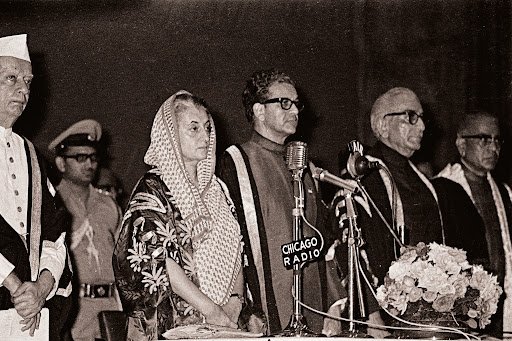
1. Missing the First Degree I had to miss my B.Tech convocation due to my stupidity on Janmashtami in 1973. I was still on the campus pursuing M.Tech. Some of the guys in the hostel had strung a rope across two wings on the second floor for the handi on Janmashtami day. After dahi-handi was over, I accepted a dare to cross the span on the rope using my hands and legs. I succeeded. But I’d forgotten that the rope would sink under my weight and ended up having to literally haul myself up for quite a long part of it. Ended up pulling my belly muscle and missing the Convocation which was the next day. The dare was for a princely sum of Rs. 5. Mrs. Gandhi was the Chief Guest at the convocation. But for the activity involved in winning Rs. 5, I’d have received my degree from her. 2. Tarzan’s Lakshman Rekha First the battle of wits between R. Krishnaswamy (aka Sluggo) and Premji Varsani (aka Tarzan). First a little background information. In H5, we used to have single seated rooms. Each room had a wall on one side and a partition on the other side. The partition was open at the bottom (about 4”), and at the top. The top of the partition was approximately 7’ from the floor. It was open from there to the ceiling. So light and sound on one side was visible and audible on the other side. The two students each living on one side were called “partners”. We lived on the second floor of H5 in the front wing. Our wing had 12 rooms. Tarzan lived in Room 267. His partner Ashok Mulani lived in Room 268. Mulani was in EE, Tarzan was in Aeronautical Engineering. Mulani rarely lived in his room. When on campus, he would live at the Computer Center writing gaming software to play games on the Minsk 2 computers. But during exam weeks, he would live in his room and try to get ready for exams. Getting him ready was Sluggo’s responsibility, who would try to teach him in 2–3 weeks what had been taught over the semester. Mulani would use these coaching sessions to prepare his cog sheets more than understanding the subject matter. How he used them and survived the exams is between him and his Creator. But I digress. Often these coaching sessions would be loud and go late into the night. That would disturb Tarzan, who also needed to study. Sluggo also used to laugh in a unique loud non-stop “Ha, ha, Ha, Ha” laughing fit. That would really drive Tarzan nuts. So, sometime in fifth year, he got hold of a chalk and used it to draw a line in the veranda outside the rooms. It was just at the point where Mulani’s room ended. He called it the Laxman Rekha, referring to the Ramayana description of the protective line drawn by Laxman to protect Seeta before he set out to look for his brother Ram. Sluggo was warned that if he ever dared set his foot across the line drawn by Tarzan, Tarzan would inflict a lot of physical pain on him. Sluggo would retaliate by showing up in our wing at random times and stick his big toe right up to the line without crossing it, then call out to Tarzan telling him he was there and planned to cross the line. Poor Tarzan would drop his books and come out to defend his territory. This went on for a semester before Tarzan realized that he was wasting more time defending his line than would be the case if he just let Sluggo freely come and go. So he erased the line after a semester. 3. Snacks & Larders The story about sweets and snacks involved another wingmate, M. N. Kale of Aero. Many guys in our wing were Bombayites. They would go home for the weekend on Friday night and return on Monday morning. During exam periods, everyone would hit the books and stay on campus on weekends too. Family members of some of these guys used to come over to visit them on weekends and generally bring some snacks and sweets for the student they were visiting. Usually, the quantity was generous enough to allow sharing the goodies with others in the wing. We used to eagerly wait for the visitors to leave, and as soon as they left, we would descend on the room of the student whose family had just departed. We would get our share and return to our rooms. If the student decided to accompany his family to the bus stop, he would leave his room unlocked to allow us to enjoy the snacks without having to wait for his return. We would make sure that his share was left behind for him to enjoy when he returned. Mr. Kale too was one such Bombayite. During one exam period in our third year, his family came over and brought a lot of yummy snacks and sweets. When they left, Kale hid all the snacks in his closet, locked his room, and went to Y-Point to see off his family. Kale’s partner too was away for the weekend, making entry to his room impossible by scaling the partition from his partner’s room. All of us were livid at Kale for locking his room and hiding the snacks. One of our wingmates, Mr. Arvind Gogate of Civil Engineering, was a very slim and agile fellow. At our goading, he climbed up the front door to the narrow opening above the doors of our wing. This opening was just wide enough to allow entry of pigeons. But Gogate squeezed through the opening into Kale’s room, opened his closet, got all the snacks out, and passed them through the narrow window beside the door. After passing everything out, he exited Kale’s room from the main window to the back of the room, crossed over to the
Matters of Mischief

Sholay in H8, Dahi Handi Prize, Ek Ka Do

1. Sholay in H8 This was in our third year. We had just won the Institute Treasure Hunt. Our joy knew no bounds. Jitna daru ka stock tha pee liye. But yeh Dil Mange More. So we went to YP seeking some more. It was late in the night. RLC ka stock khatam ho gaya tha. Lekin, hamare liye, kahin se leke aaya ek botal. We didn’t bother to see what was in it. Leke aaye triumphantly hostel mein. Polished it off in no time. Angoor ki beti chadh gayi in no time. Must have been some like spurious stuff. Didn’t know what hit me. I suddenly felt like relieving myself. Staggered up to the toilet. In the toilet were five doors. The two on the left were bathrooms. The two on the extreme right were toilets. The fifth one in the middle was a sort of trap door. Opens to open space. Just one small step and a ladder leading to the terrace. Now, try as I might. I kept opening the middle door. Alfie and Jakebhai tried their best to pull me out and shove me through the right door. But suicidal tendency ruled. I would keep going back to the trap door. A la Dharmendra in Sholay. Suicide! Finally, they managed to put me into the right door. Suicide CANCELLED. Now cut to our Silver Jubilee Reunion. When the family visited the hostel, I found Alfred (Grease Baba) very eager to show my son Abhishek around, especially when it came to our wing. He quickly took Abhishek to the bogs and showed him the middle door and said, “This is the door through which your father attempted suicide.” It’s only thanks to us that you are here today. Else, Bhagwan ko pyaare ho jaate, tumhara father. Bach gaya saala! Woh suicidal tendency kuch tha nahi! Bass kadam chuk gayi. Was like Arjun. Sirf ek door nazar aata tha. Totally focussed. Kaash padhaayi mein aisa hota! 2. Dahi Handi Prize – Stars in the Day Time! Our third year Gokul Ashtami. Dahi handi at hostel. Pyramid ban gaya. Kept calling. Finally OK. Lekin upar wala tha nahi. I volunteered. Went up. Fell down the first time. Second time successfully reached the handi. Even as I was breaking the pot, I felt the earth (rather pyramid) below me shifting. People below me came down. I was left hanging to the pot. Handi se dahi nikhal gayi. Muh mein dahi jam gayi. I was literally left hanging by the thread (rope in this instance). Even as I was thinking of my English Teacher, Mrs. Castellino who had taught me only about Jack and Jill and Humpty Dumpty and pride having falls, here I was coming down at speed to join the gang. Even as I was thinking about it, thud, crash, stars. Main kahaan hoon types (almost). 3. Ek Ka Do In our 5th year project submission time, I wanted to go to the department and show the report to my guide, Pattu. I borrowed a friend’s bike (name withheld), a rickety hand-me-down of the 60s vintage. Around 12:30, I was returning from the department. When I went past the convo on to the slope, I felt the front wheel moving away from me. Dekhte dekhte, there were 2 single wheelers instead of one bicycle. Poor I, had to pull the two vehicles, luckily only up to H8. Socho, what would have happened if I were in H6! When I entered the hostel with the two new vehicles, the owner of the bicycle went red. Being a shuddh Jain, he controlled his anger. But his looks almost killed me. Ek Ka Do!

Roomies, Roads & Rites

War Piece

There used to be, and maybe there still is, a quota for foreign students. The IITs used to attract students from all over the global south. Hostel 4 was lucky to get its share of foreign students. They used the H4 Canteen a lot and when the canteen boy ran out of supplies, some of them would give money on credit to the canteen boy to buy more supplies. Two such benefactors were from the Middle East – one from Iraq and the other from Iran. They spoke the same language and became good friends as most of the Indian students would go home on weekends or during the winter and summer breaks leaving mostly the foreign students to give each other company. When the Iranian Revolution happened in January 1979, a group of Iranian students from all hostels got together and held an exhibition in the Convo Hall on the atrocities by the Shah of Iran and his brutal Savak secret police. The pictures in the exhibit were blood curdling. I had never seen such pictures of brutality before and I remember the exhibition pictures to this day. Then, Iraq invaded Iran in September 1980. This led to a great dilemma for our Iraqi and Irani friends in H4. One had a brother in the Air Force, and the other had a brother in the army of the opposite side. The brothers were fighting each other, and here they were, stuck together in a foreign land without much other support. I could see the tension and confusion in their eyes as they struggled to reconcile their situation in India with what their respective brothers were facing in the Middle East. I graduated in 1981 and left IIT Bombay. I don’t know where these friends ended. The war lasted eight long years. I don’t know if their friendship survived the war. All I can say is that this experience influences my outlook on the Middle East as well as wars in general to this day.

Breaking the Mold

Rainbow Stories

Industrial Design Centre (IDC) has been instrumental in making me who I am — even more than the design education I received there, it provided me with a soul mate who helped me discover myself. I met Suhail Abbasi the day I came for the interview for admission to IDC in 1984. I never knew we would be close friends for 35 years and counting. He is more than a friend, a soul mate to be precise. We were in the same batch of 8 students of the first Visual Communications batch of IDC and bonded closely — because I, being from an Engineering background (NITK Suratkal), sought his help to execute artworks as he was from Applied Art background (J. J. School of Arts). In fact, all eight of us were very close as it was such a small batch then.  While Suhail and myself bonded closely we never spoke about our sexual orientation. At that point in time, I was not even out to myself that I was gay. I was deeply closeted and too scared to admit my sexual orientation even to myself.  I was deeply closeted and too scared to admit my sexual orientation even to myself.  Remember, it was the pre-internet, pre-cellphone era! Nothing was ever spoken aloud about sexuality, everything was hush-hush. If you are slightly effeminate you would be teased by your hostel-mates. I had to project at being ‘normal’.  It was a tough time hiding one’s innermost secret and pretending that everything was happy and joyful. It was a really painful time. After we passed out of IDC, Suhail and I remained good friends as we tried to go on our course of job hunting — he joined the film industry and I joined an institute for the hearing impaired as their Mass Media Officer.  It was only after three years of passing out, in 1990, when Suhail co-founded Bombay Dost, India’s first gay magazine, that I came to know of his sexual orientation, though I always suspected it. Very soon I came out to him that I was gay too. He coolly said, “Big secret!!” From then on Suhail and I bonded even more closely, we worked on the magazine together, and then went on to co-found The Humsafar Trust, India’s first gay organization, in 1994. He has been a consistent support to me all these years. From then on Suhail and I bonded even more closely, we worked on the magazine together, and then went on to co-found The Humsafar Trust, India’s first gay organization, in 1994. While at IDC, Ravi Poovaiah and Ajanta Sen were constant supporters. They kind of knew about Suhail and my sexual orientation, but they never asked any questions. Their silent support meant a lot. Of course, after we came out to each other, we came out to Ravi and Ajanta too and they continue to be amazing people who have even attended some of our gay parties! While Suhail continues to be on the board of The Humsfar Trust and also work as a creative director for many shows, I have managed to pursue my dream of making LGBTQ films and also found KASHISH Mumbai International Queer Film Festival, which over the past 10 years has become South Asia’s biggest LGBTQ film festival.  We both were in some way instrumental in Sec 377 being finally read down in September 2018, as petitioners challenging the law in the Supreme Court — Suhail being a petitioner along with The Humsafar Trust, and myself being one of the petitioners from Pravritti, the pan-IIT LGBT group. Now, IIT Bombay has Saathi – IIT Bombay, the campus LGBT group which is doing amazing work by bringing together the LGBTQ community and allies on campus. They also have a counselling helpline and organize several activities on campus.  Earlier this year Suhail and I were on a panel organized by Yaariyan, the youth LGBTQ group, along with Saathi — IIT Bombay. We reminisced about our early days on campus and laughed out loud about how closeted we were. But there were tears mingled with laughter. Tears of joy, that we have come so far in LGBTQ rights movement where it is not illegal anymore to be gay in India. Campuses are far more inclusive of diversity, and there are so many companies who have their D&I policies in place, to offer placements to LGBTQ persons.  I’m so happy that I met Suhail 35 years ago, and so thankful to IDC for having put me on my path to self-discovery and contribute in my very small way to the betterment of the rights of the community.  

Breaking the Mold

Women in IIT Bombay

(This article was written in October, 2017.) Writing about women in IIT, starting off with my memory of being there almost four decades ago, is a difficult task. And it is not because memories fade and things change, but because some memories refuse to fade and some things refuse to change. This is of import today because as I write this there has been an attack in a University on women students who were protesting against sexual harassment and the discrimination that they face on campus. They were fighting for more proactive measures by the University to address the harassment they faced from the men on campus, the fact that the streets were not adequately lit, and also that they were being locked into the hostel earlier than the boys and not being given similar food [1]. Over the last couple of years, as these voices of rebellion of women students have risen from across the country – DU, JNU, AMU, Mumbai University, Allahabad University, SRFTI, BHU … (and I am sure many others that did not make national news) – I am reminded of the year 1978-79 when a small bunch of us were protesting similar discrimination on the IIT Powai campus. We were students of IIT who resided in a students’ hostel like the others, but who did not experience the campus like the others. We were barely 75 women in the “Ladies Hostel” (or LH as it was then known). There were almost 3000 other students in nine other hostels, named Students Hostel 1 to 9 (H1 to H9) on campus. Not only was the name assigned by the authorities a marker of our difference, we were located far away from the others, away from the hub of student activity, apparently safely ensconced on the fringe of faculty housing under the watchful eye of the Director from his bungalow. It is another matter that this proximity to the Director made it easier for us to go petition him from time to time for the room shortage that we faced every year from 1977 onwards (till very recently I hear). Or to protest against the ridiculous seven-foot boundary wall that was once proposed because an intruder had entered our hostel one summer night bringing much excitement in our dreary summers. Not only was the name assigned by the authorities a marker of our difference, we were located far away from the others, away from the hub of student activity, apparently safely ensconced on the fringe of faculty housing under the watchful eye of the Director from his bungalow. The rules on paper for all the hostels may have been the same, but the way in which they were imposed on the students of our hostel was very different. There was no curfew for the other hostels and in reality anyone could enter and exit these hostels. It is another matter that we were wary of going on that side of the campus. The true character of the cream of the nation, the so-called “above average IQ” person who resided in the students’ area, is best left undescribed because it is a known secret to all alumni of IIT. In this situation, as students of the campus we raised the issue of changing the name of the hostel from Ladies Hostel to a respectable Students Hostel 10 (just like all the other student hostels); we demanded that the curfew on us be lifted; and we wanted to formulate our own rules so that all guests (irrespective of gender [we only thought in the binary then]) be allowed conditional entry into the hostel with the conditions being those that we collectively arrived at as residents of the hostel. We all came from different backgrounds and so arriving at agreements on rules was not easy, but we managed to arrive at workable solutions that were agreeable to all the residents of the hostel. It meant long discussions amongst us about issues of privacy and safety. Those lessons about living together with different points of view and of consensus building and dialogue as methods of democracy refuse to fade. We dreamt big. And we managed to get all that we wanted, implemented. How we achieved the change was just that – we did it. It was our hostel. We decided how we wanted to live in that space, what we wanted to call it and we just started doing exactly that. We did not have other examples before us. We just did not accept the fact that we were being treated differently. We saw ourselves as students of the campus. This particularity of being treated different just did not seem right to us and we were using the logical training that we were getting to address it. The interesting thing is that we managed to do all of it without active intervention from our teachers or the institute. We were happy to have a non-interfering warden, someone who was an independent woman and treated us as autonomous young women. And much to the credit of IIT authorities then, we did not face any backlash for deciding our own rules and nor did we have to agitate a lot. One needs to say this because in the present moment there are many universities where the authorities have been ruthless in the ways in which they deal with such actions. Obviously it was a different time. It was post Emergency when it looked like anything could happen. It was the beginning of this new articulation of feminism, unlike the present when there is a steady backlash against feminist articulations, as the world realises the full potential of what real equality means to the existing social order. So while gender equality is a catchword, the meaning of equality is different especially for those in authority. The confusion around the meaning of equal access, leads to inclusion that is half hearted. In this context I wish to initiate a discussion on the issue of number of

Scroll to Top